


Email & Deliverability Monitoring at Litmus
Litmus Email Guardian was the first of it’s kind tool that proactively monitored emails for rendering issues, broken links, broken images and other potential problems—especially after email client updates.
PROJECT DETAILS
Role: Principal Product Designer
Team: PM, Lead Eng & 2 supporting Ruby engineers
Timeline: September 2023 Beta, Image & Link monitoring launched to GA April 2024, Deliverability & Sender Authentication October 2024
Platform: Web
CHALLENGE
Our September 2023 beta monitored one thing: email client updates that broke rendering. Customers told us that was only part of the problem. Broken images and links cost them just as much, and they didn’t trust our checks, so they still clicked every link by hand. Their automated and transactional emails ran for months without anyone re-testing them. Email Guardian had to grow from a rendering check into monitoring customers trusted enough to stop checking manually.
GOALS
Marketers: Catch broken rendering, images, and links automatically, with alerts clear enough that teams can act on them without re-checking every email by hand.
Business: Grow a single-feature beta into a core monitoring product across Litmus plans, with deliverability monitoring as an Enterprise upgrade.
Platform: Build monitoring into the Litmus workflow as a natural extension of testing, with clear severity so every alert matters.

The realization
Rendering was only one of the things that could break.
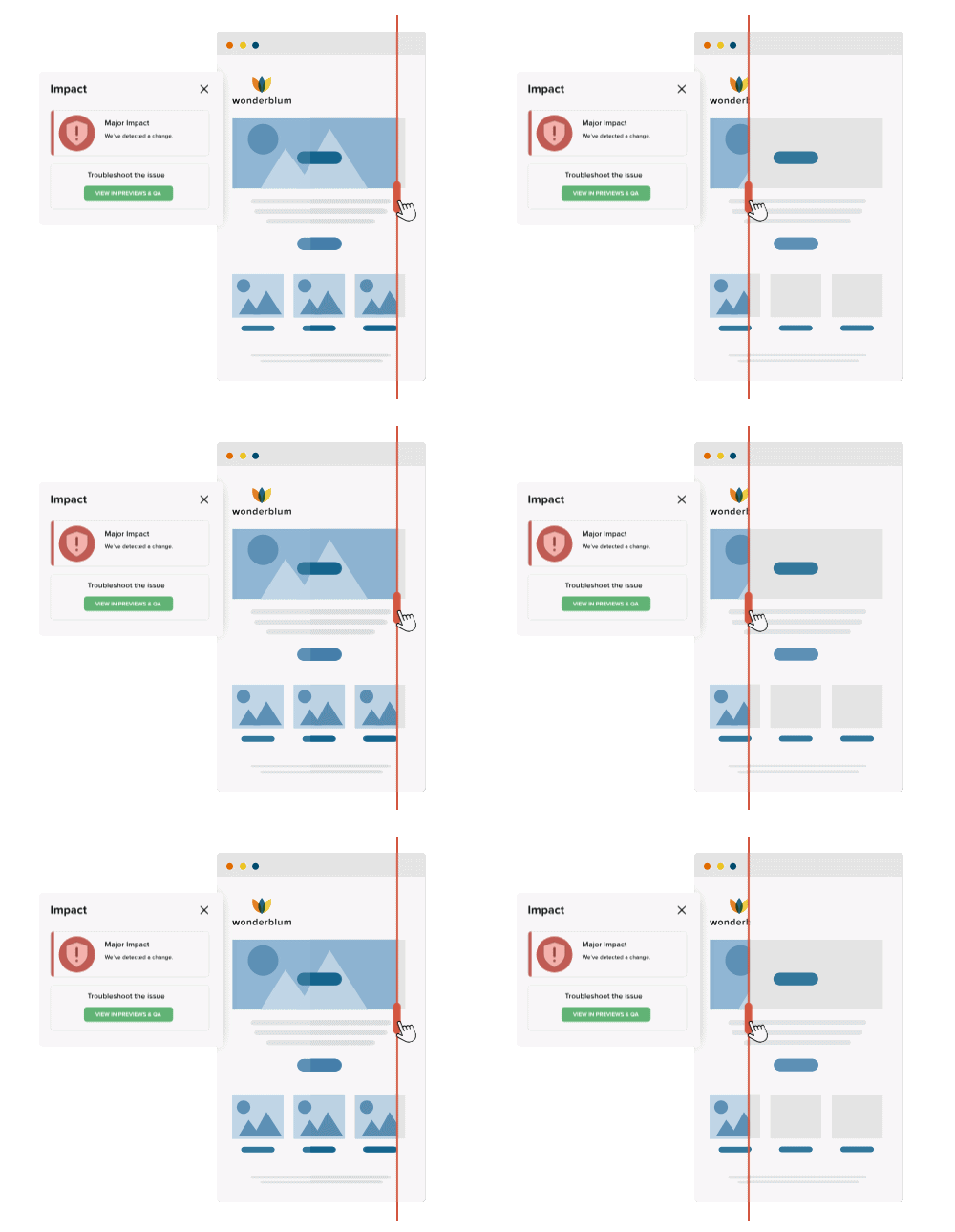
In September 2023, we launched the Email Guardian beta with one job: catch email client updates that break how an email renders. It compared a baseline snapshot to the most recent one across Gmail, Yahoo! Mail, Outlook, Outlook Office 365, and AOL, and alerted customers to Major or Minor changes.
The beta showed that marketers wanted something watching their emails after send. It also showed that rendering was only part of the problem. When customers described a “broken email,” they meant anything that could fail after the email went live. Links, Images, Renderings and Deliverability issues.

the BETA
Early Access Findings
86%
of consumers will leave a brand they trusted after only 2 poor customer experiences
3X
email volume growth over three years makes manual link testing impossible for marketers.
50%+
More searches were driven by "Email Guardian" than any other help site term after launch.
“We’ll test and approve email campaigns weeks before they are sent to the customers. A lot can go wrong in those few weeks.”
- Email Guardian BETA Customer
“I click on every link within the Q&A section [of Litmus] even if it’s green and says its working ...”
- Litmus Self Service Customer

Proof in the real world
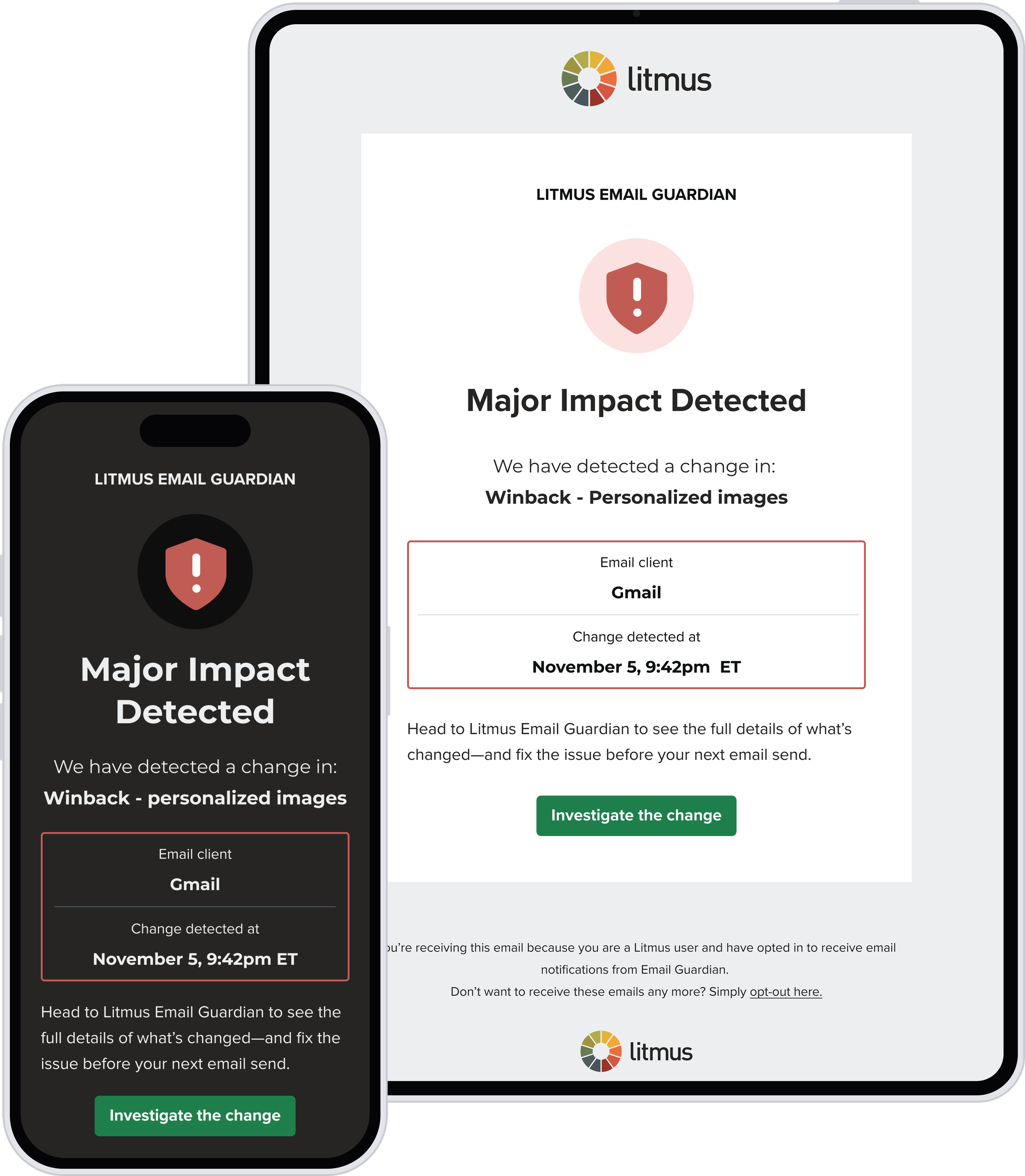
Shortly after Email Guardian’s rendering release in late 2023, a routing issue with Google’s Image Proxy broke the layout of emails for millions of Gmail users. Email Guardian caught the problem and alerted every customer using it, so they could adjust before it damaged their campaigns. It proved the value of always-on monitoring and made Guardian a must-have for the marketers who relied on it.
“Our welcome series, receipts, and password resets had been running for years with nobody looking at them… We wouldn’t have known anything was wrong… Email Guardian sent us an alert email and we were able to get ahead of it as opposed to finding our weeks later from a support ticket.”
- Email Guardian BETA Customer

The next phase: link & image monitoring
How might we expand Email Guardian to proactively protect an email’s visual and interactive elements pre and post-send?
Seamless UX Integration: How might we weave link and image checks into the existing domain dashboard without causing cognitive overload?
Workflow Optimization: How might we map and eliminate the friction in marketers' current manual troubleshooting processes?
Contextual Timing: How might we incentivize monitoring at the exact moment it fits their campaign production lifecycle?
Automated Confidence: How might we provide continuous verification that live emails and legacy templates haven't broken?


Link Monitoring
Designed to provide email marketers with a live diagnostic audit of every link in their active campaigns. The UI surfaces critical data like server response codes, complex redirect paths, and landing page load times at a glance—eliminating user friction and protecting campaign conversion rates before subscribers ever click.
Litmus launched Link Monitoring in Litmus Email Guardian on March 6, 2024.
Key Features of Link Monitoring
Proactive Alerts: Automatically notifies users when landing pages go down or experience issues.
Error Detection: Identifies broken, mistyped, or dead call-to-action (CTA) URLs in sent emails.
Performance Protection: Helps marketing teams spot and fix problems before they impact subscribers or cause revenue loss.
Link Journey Insights: Tracks and surfaces detailed information regarding link errors and slow-to-load destinations
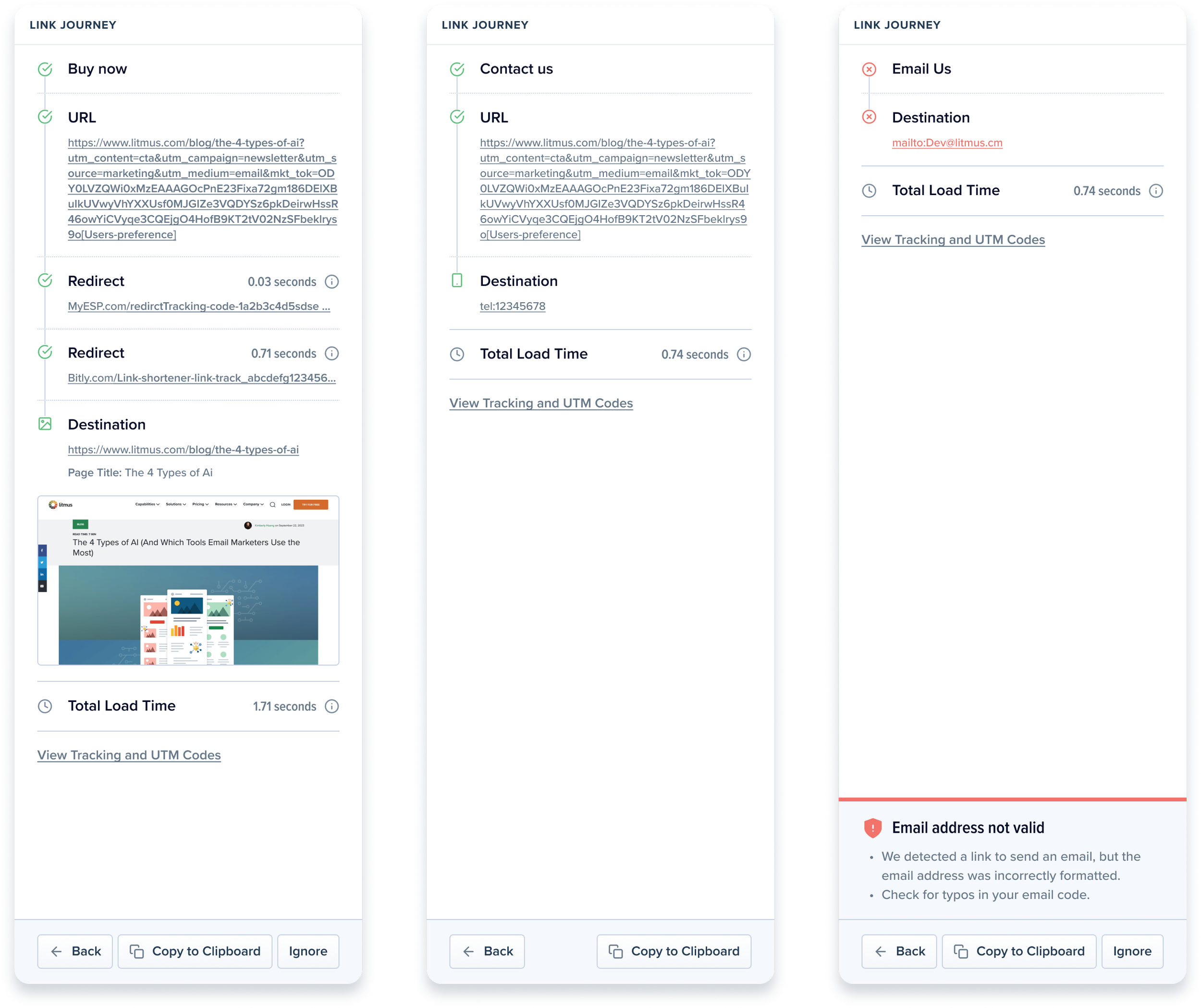



Image Monitoring
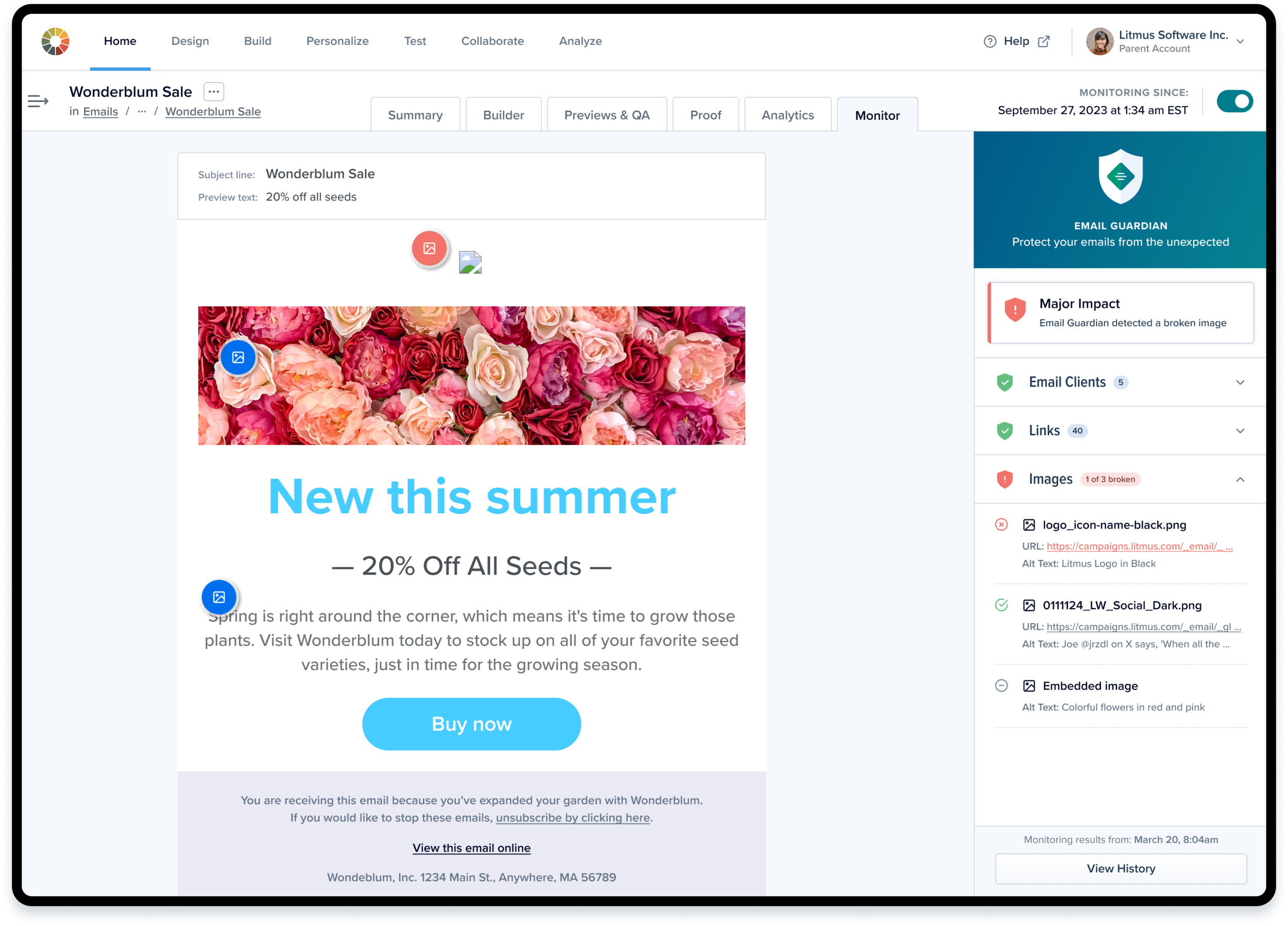
Designed to provide email marketers with a live diagnostic audit of every link in their active campaigns. The UI surfaces critical data like server response codes, complex redirect paths, and landing page load times at a glance—eliminating user friction and protecting campaign conversion rates before subscribers ever click.
Litmus launched Image Monitoring in Litmus Email Guardian on April 17, 2024.
Key Features of Image Monitoring
Automated Scans: Continually checks every active email campaign to track how assets load.
Broken Image Alerts: Automatically triggers a notification if any image fails to load or appears broken, allowing you to fix it before it impacts subscribers.
Slow-Loading Detection: Spots heavy or poorly optimized image files that slow down the email experience.
Pixel-Perfect Protection: Ensures brand trust remains intact by keeping your visual marketing error-free.
Enhancements & capabilities
-
![]()
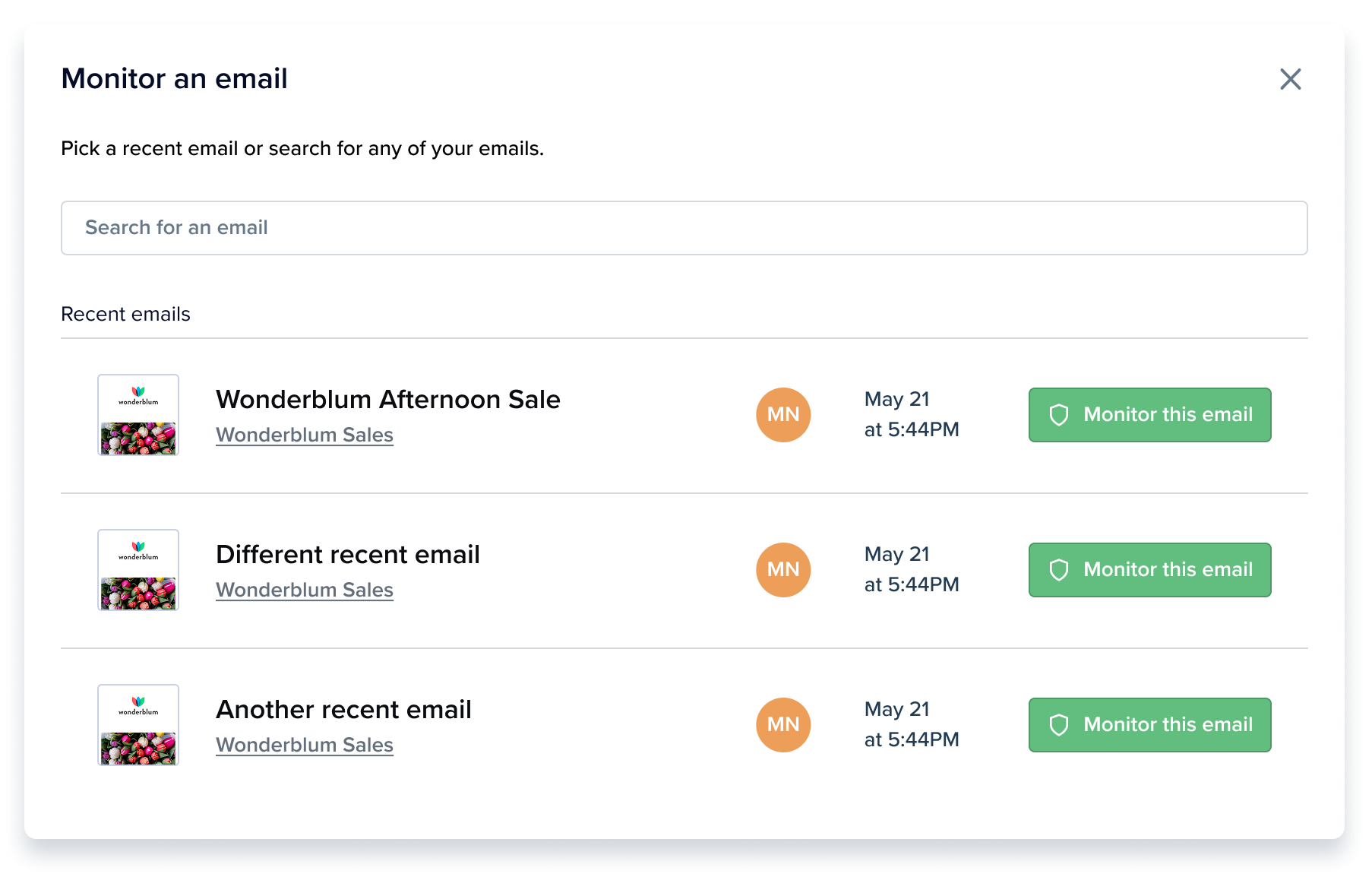
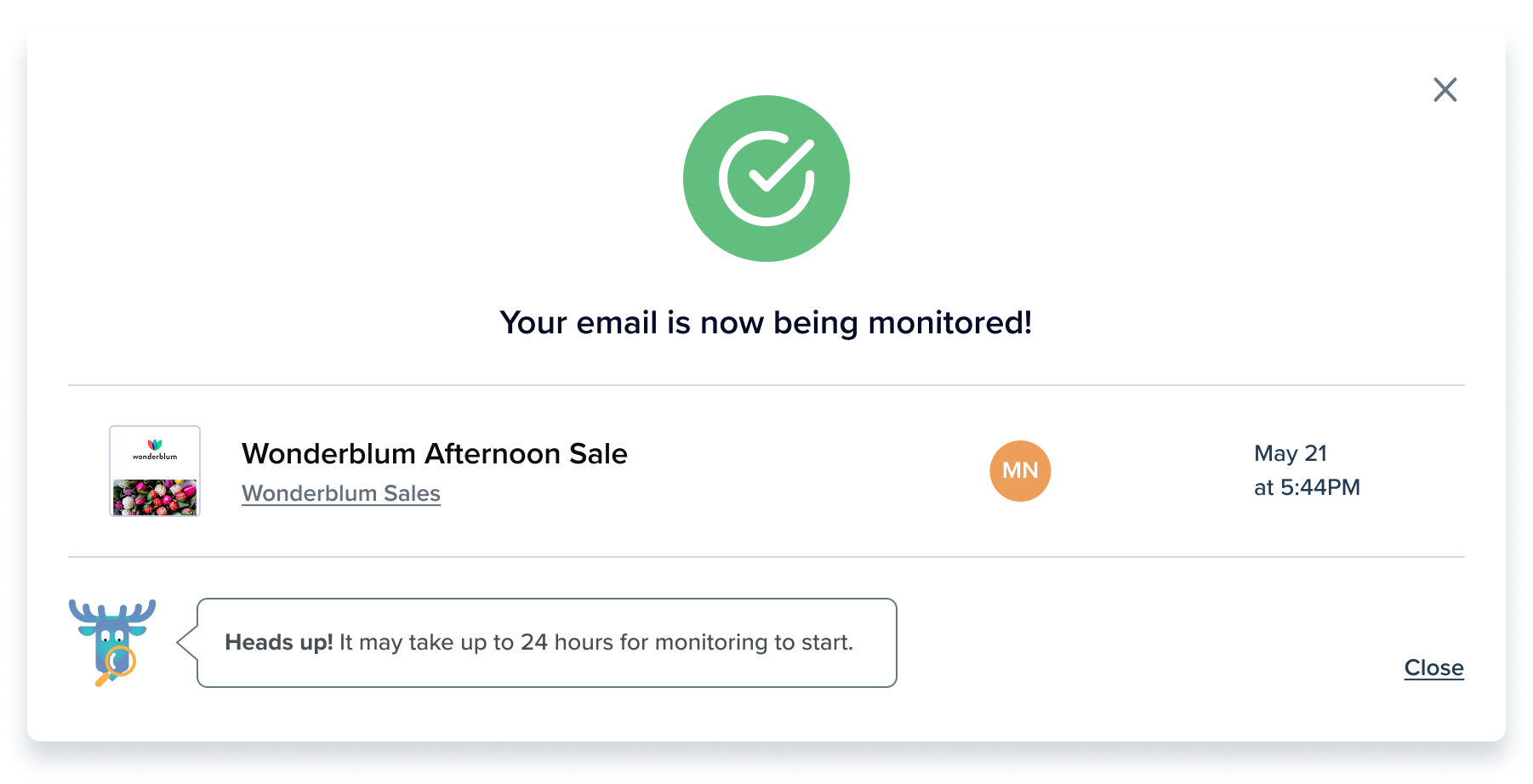
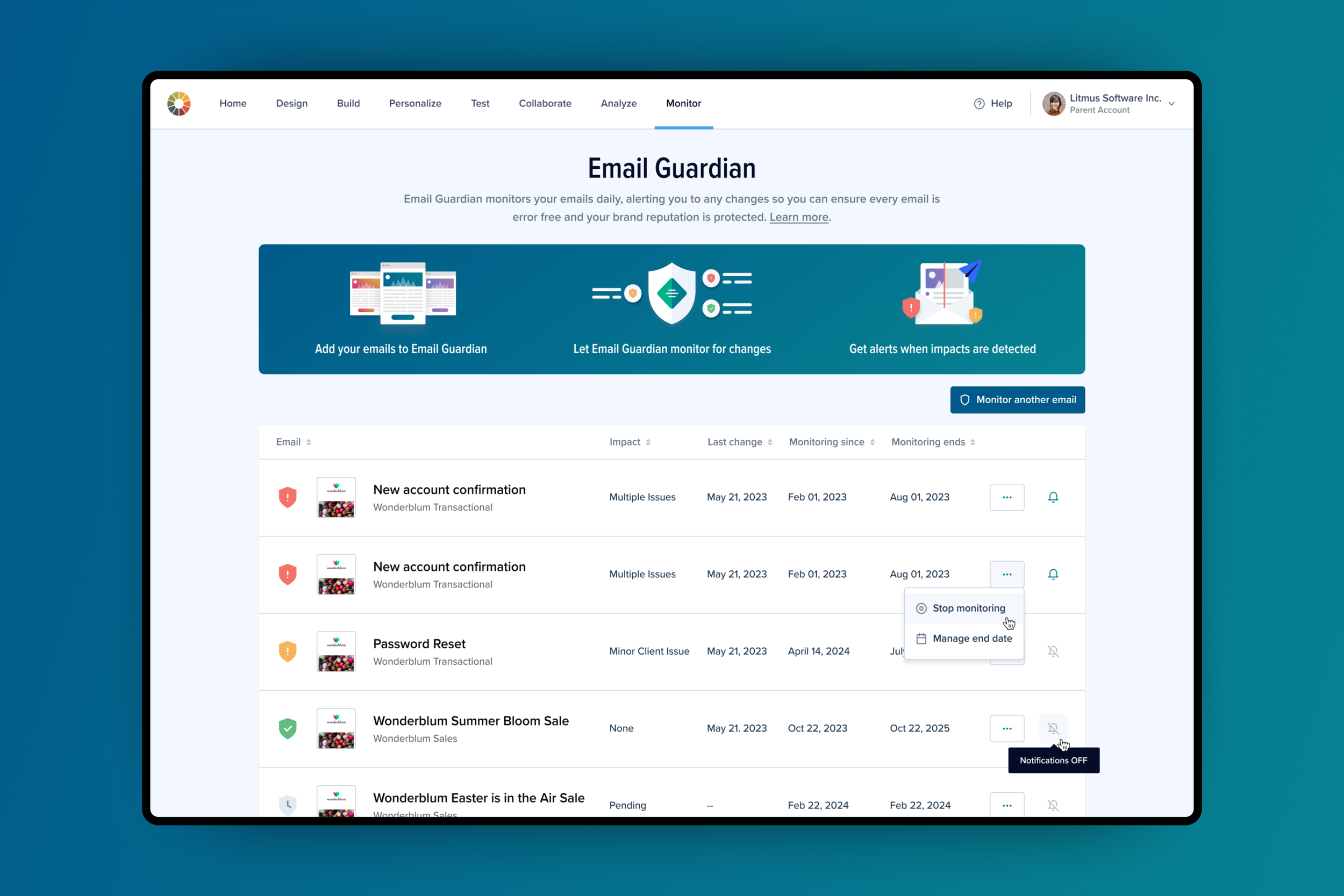
A centralized hub for all monitored emails
“Where can I see all emails I turned monitoring on?“
-
![]()
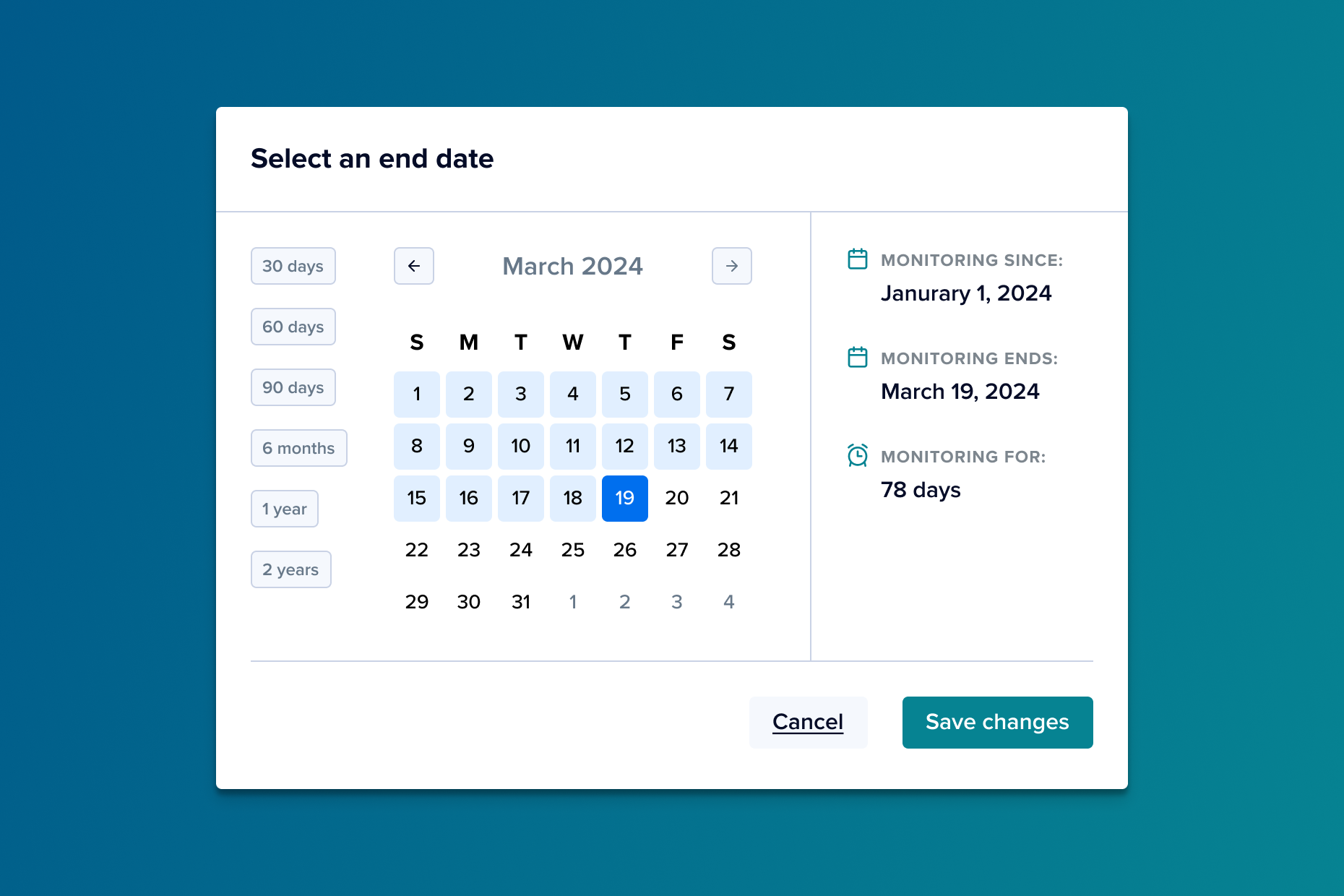
The ability to add expiration dates
“I’d like the ability to set an expiration date on a monitored email. Marketing emails have a shelf-life of let’s say 30 days to 6 months. I don’t want to get reoccurring alerts when the links expire after 6 months.”
-
![]()
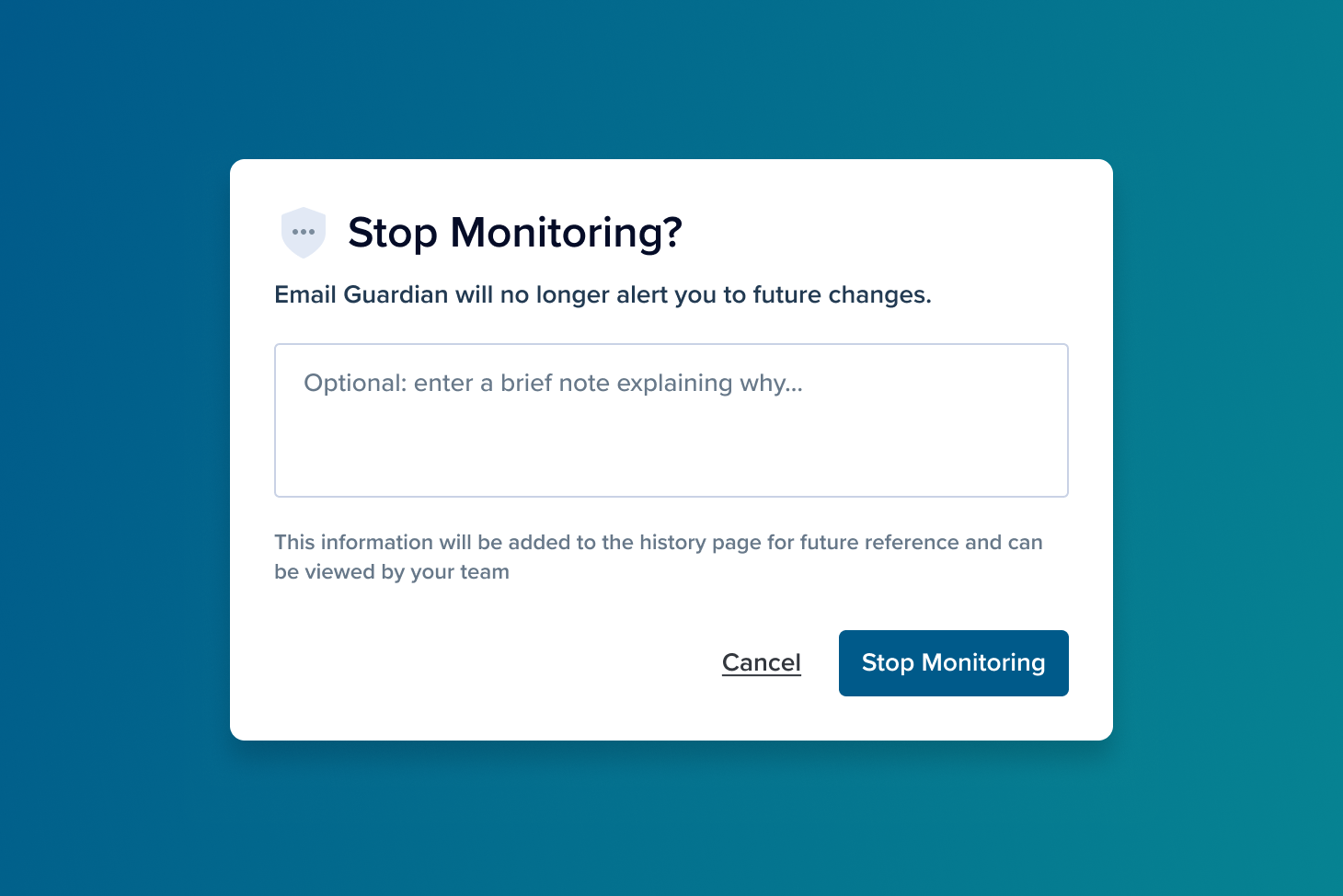
Record a comment when monitoring is turned off
“There was a webinar email from October that for some reason was being monitored and since that was a one time deployment we no longer want or need notifications but we’d want to be able to give context to the stakeholder what the email was for and why monitoring was turned off.”
-
![]()
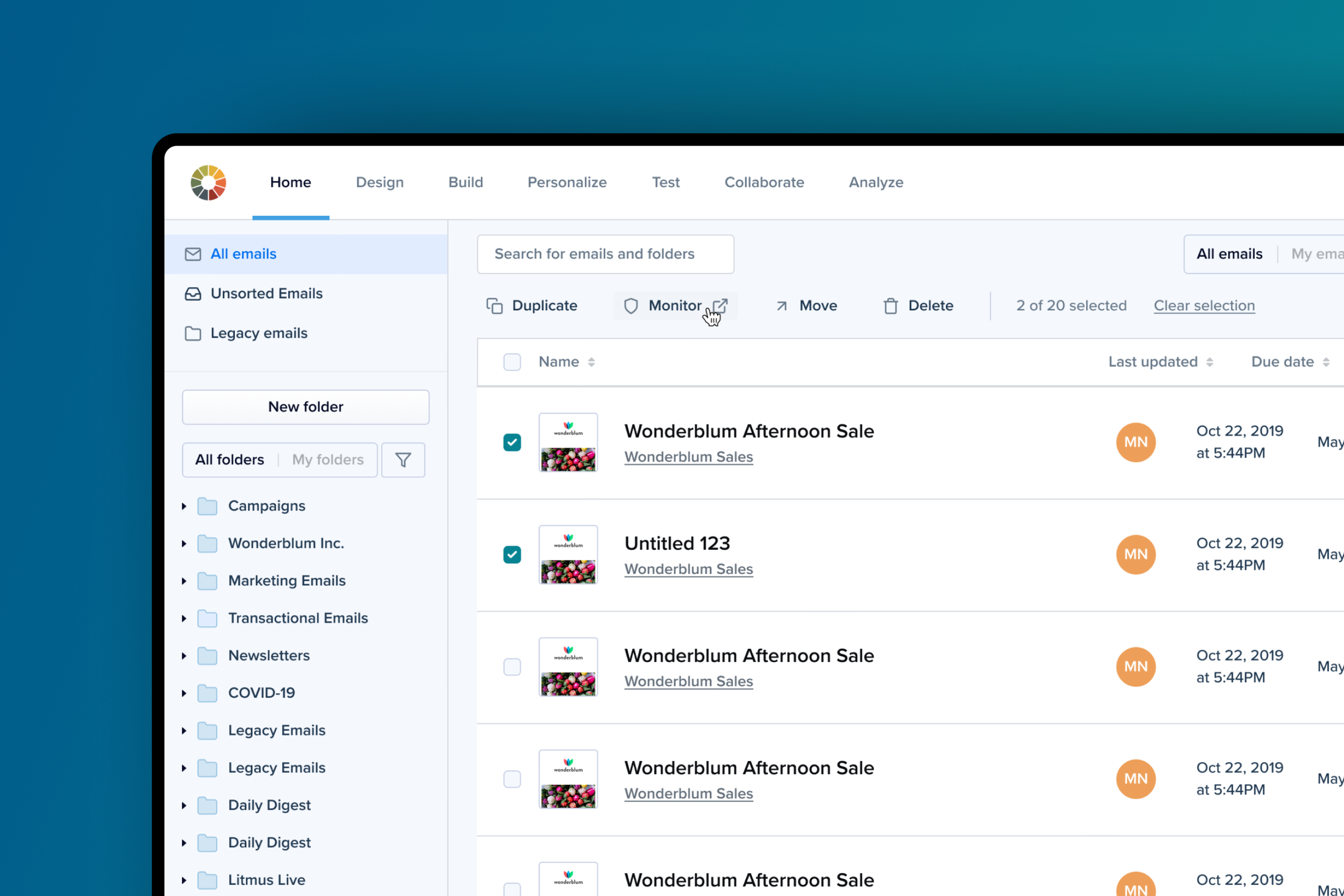
Multi-select emails to be monitored
“I’d like the ability to enroll multiple emails into monitoring at one time - especially useful as a large agency with many clients.”
-
![]()
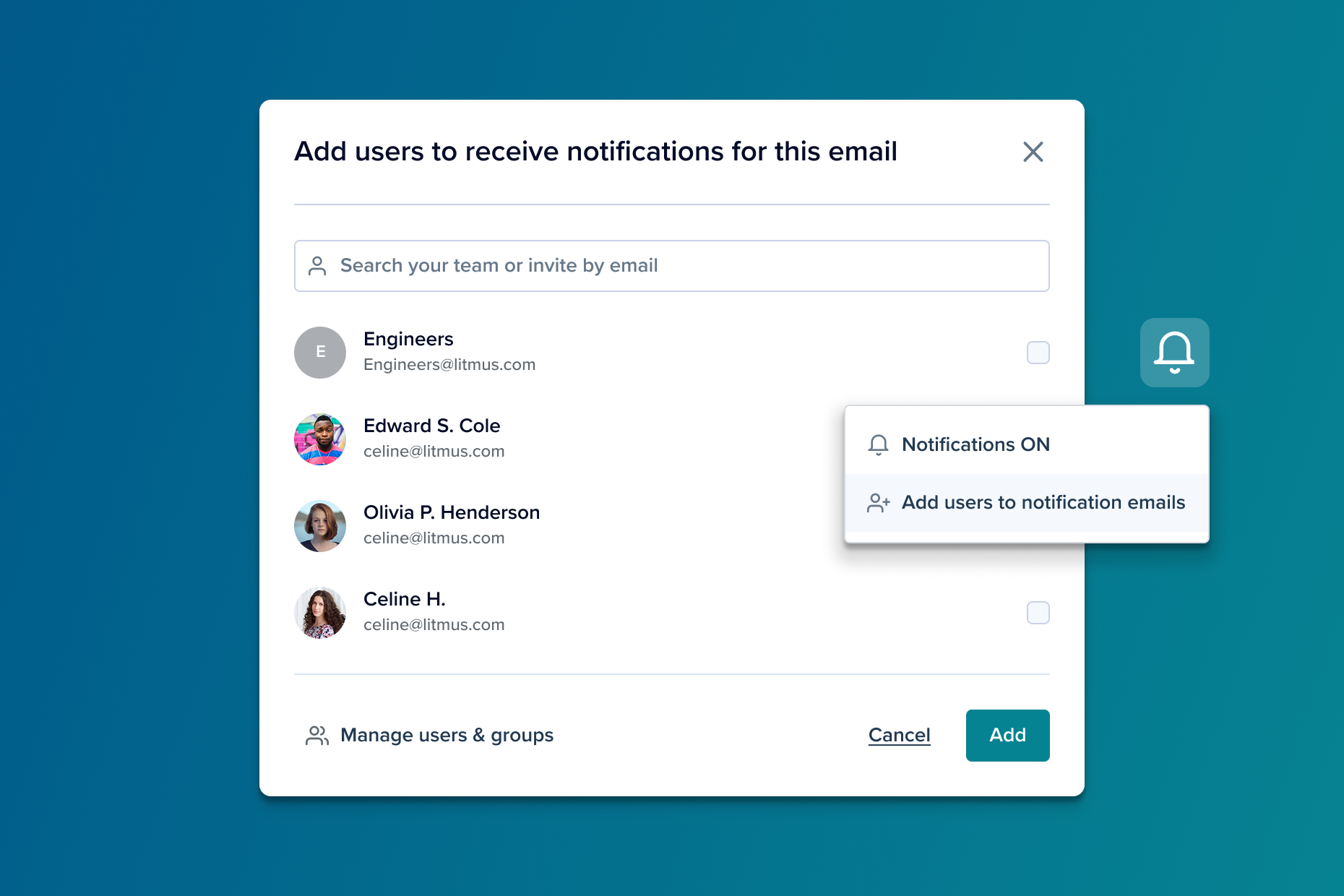
More control over notifications
“Id like the ability to select a group of people who need to be notified about each email. Everyone is getting alerted about every email being monitored and it might create a false sense or urgency — like a ‘boy you cried wolf’ situation.”
Next step: adding proactive domain & deliverability protection into Email Guardian
Deliverability Monitoring was rolled out as a core expansion of Litmus Email Guardian in October 2024, protecting emails from the spam folder through automated infrastructure tracking.
The feature set relied on three core pillars:
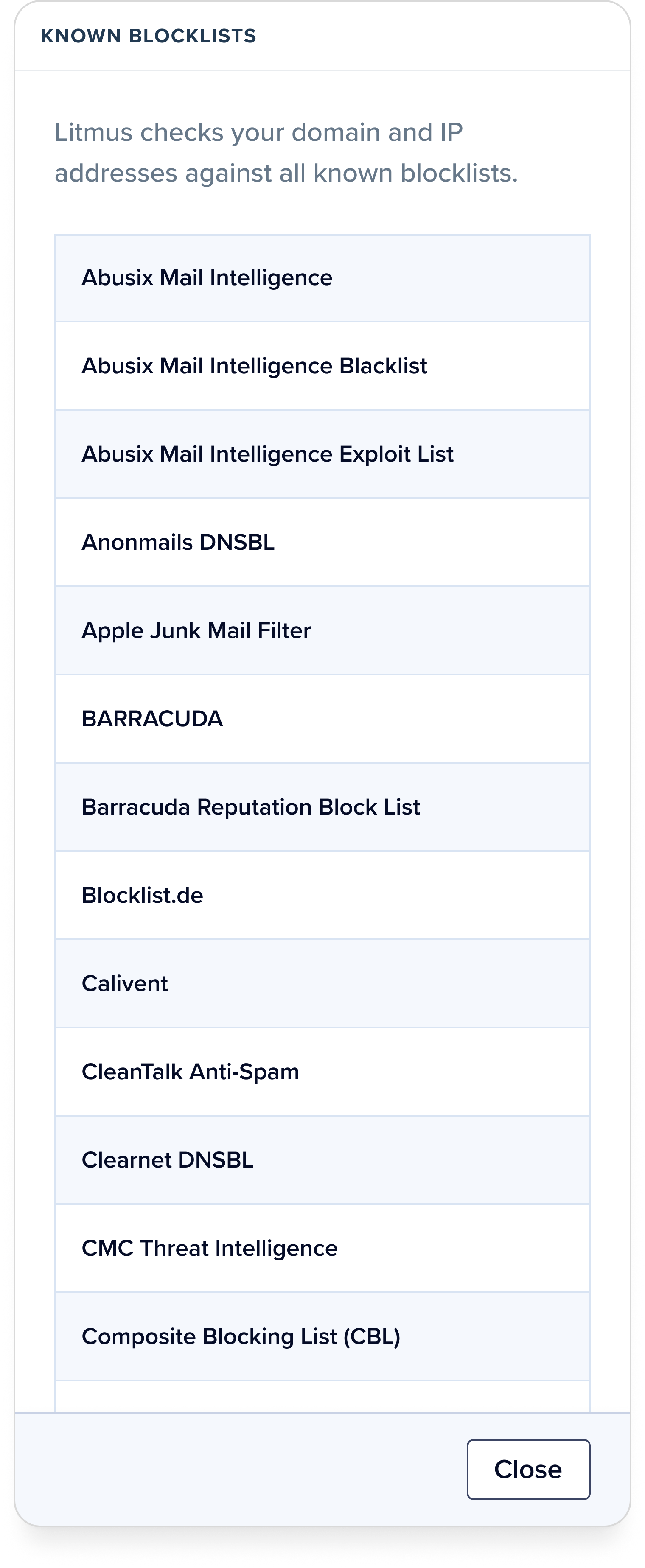
Continuous Domain Reputation & Blocklist Tracking: Real-time screening of sending domains and associated links against 60+ global blocklists, triggering instant alerts upon IP or domain flagging.
Automated Email Authentication Auditing: Persistent monitoring of technical authentication frameworks (SPF, DKIM, DMARC) to ensure ongoing, secure configuration.
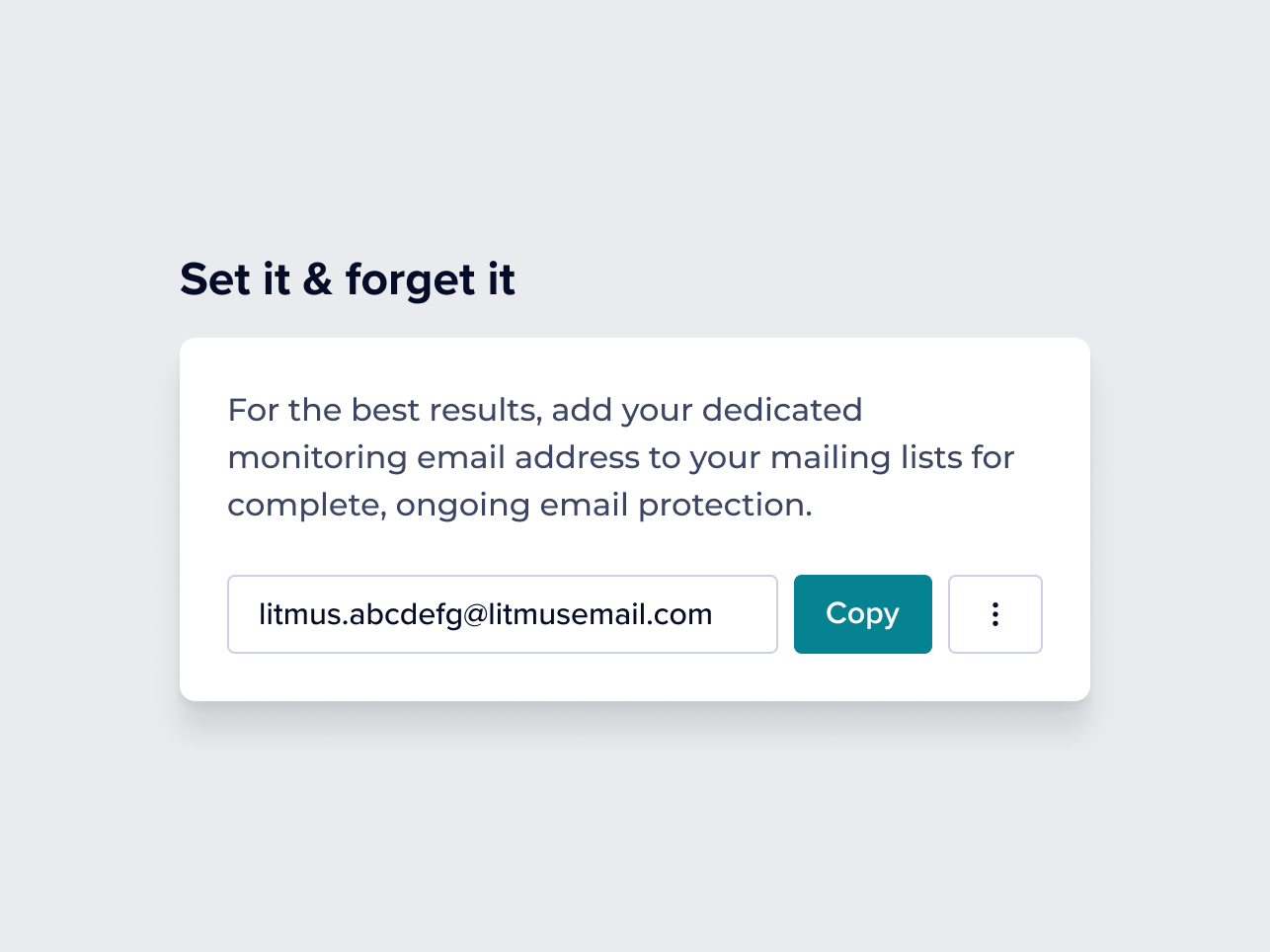
Proactive Seed Address Inbox Testing: Integration of unique Email Guardian seed addresses into automated/transactional ESP mailing lists, allowing live campaign delivery pathways to be automatically tested and validated.
Providing education & upsell opportunities
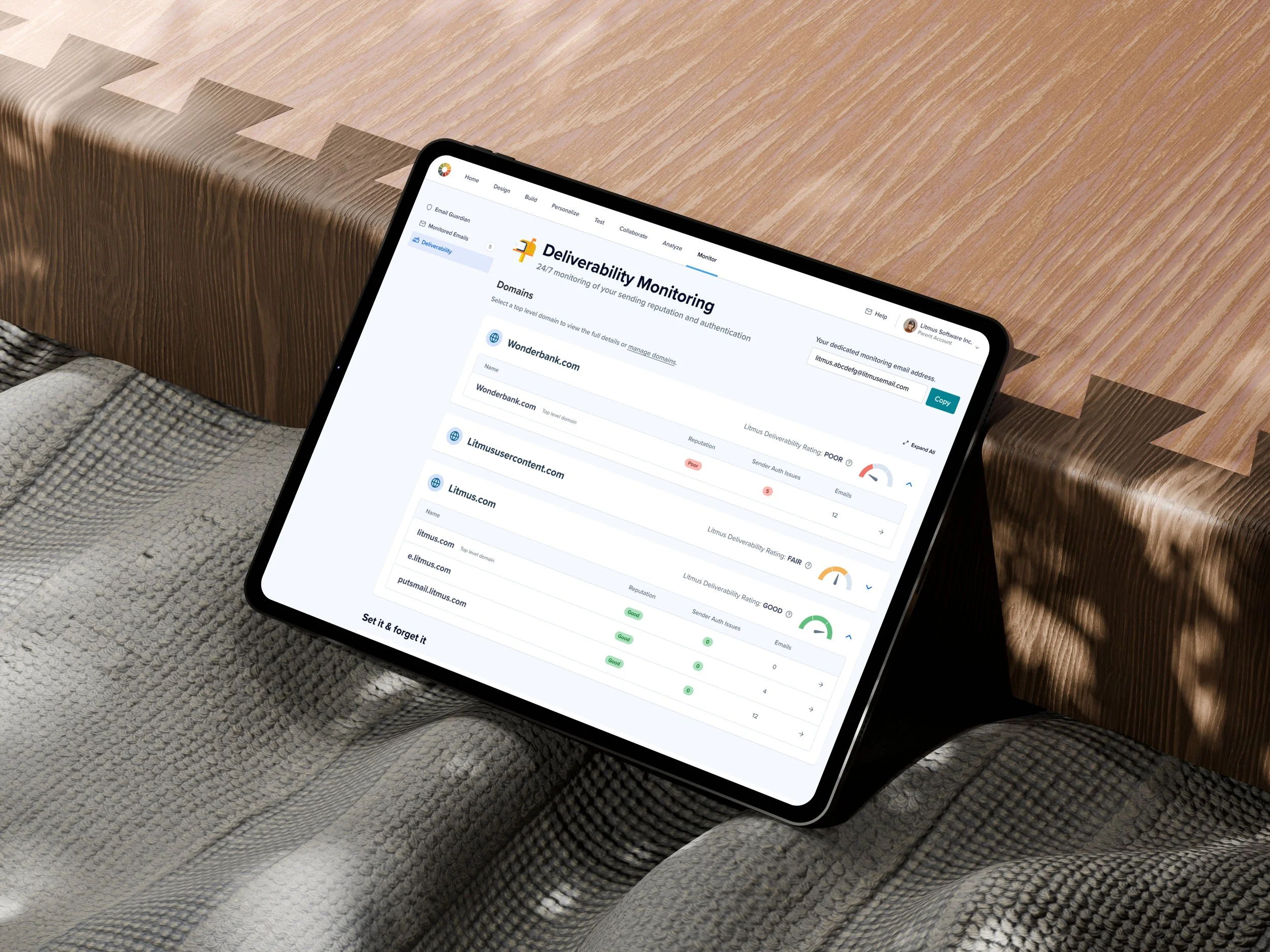
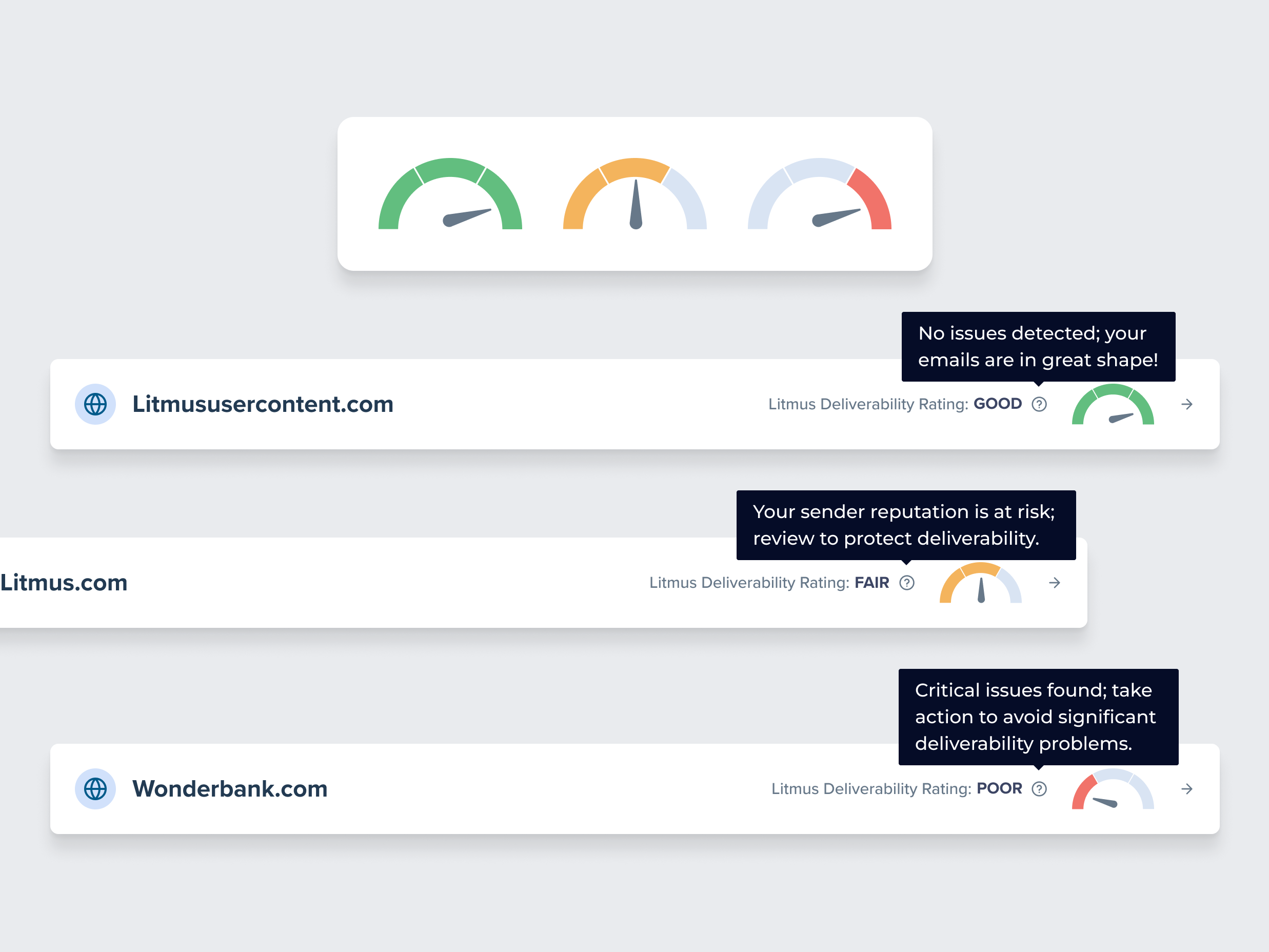
Creating a dashboard to monitor the health of all sending domains
Designing for complex technical workflows
Translated technical complexity: Converted abstract network protocols (DMARC, SPF, and DNS records) into clean, scannable visual elements that demystify complex infrastructure health.
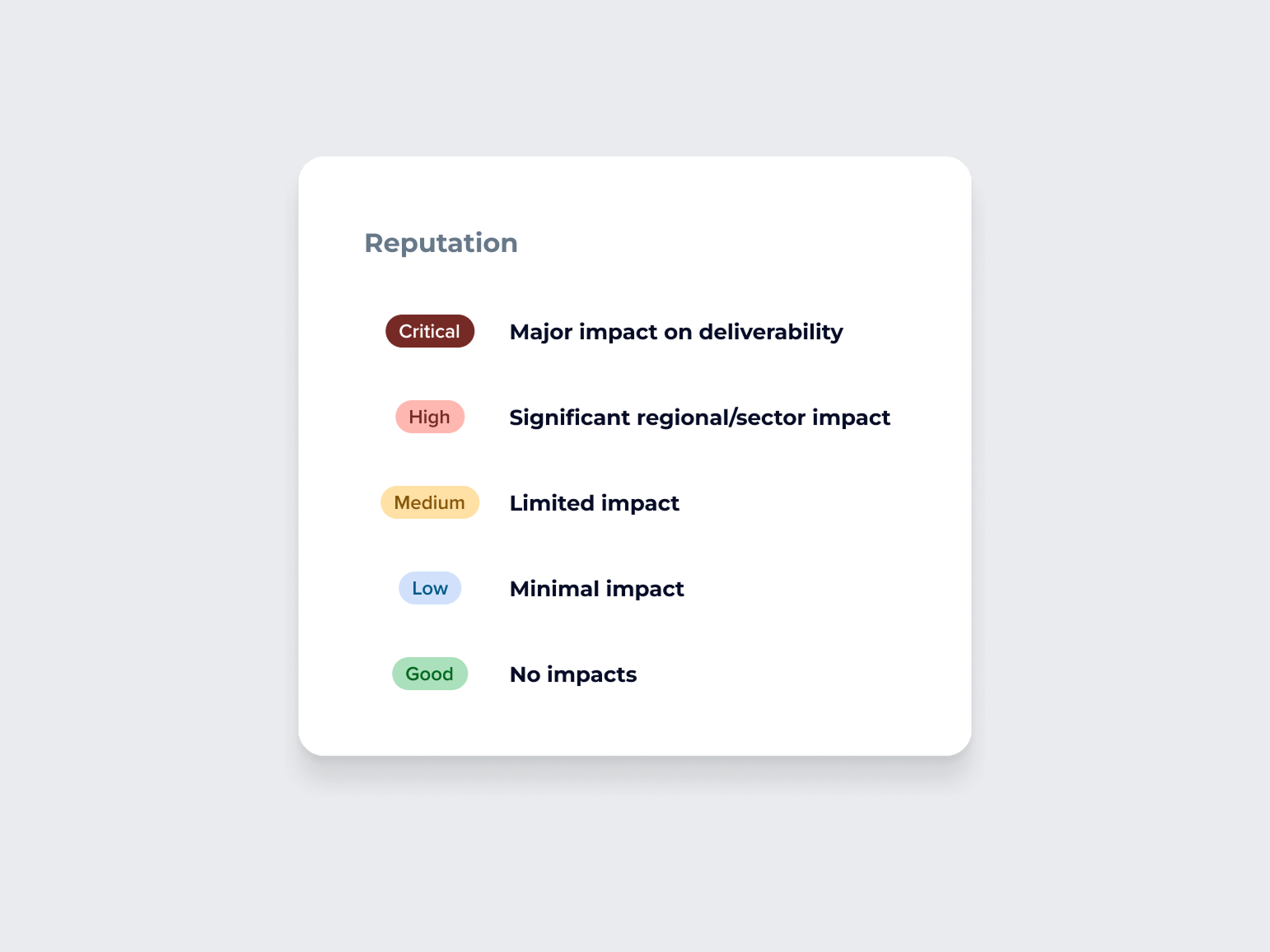
Established hierarchy via severity: Architected an alerting and dashboard framework that enables IT admins and email marketers to instantly differentiate between catastrophic domain blocks and minor configuration drift.
Defined component workflows: Designed the end-to-end user journey for generating, embedding, and tracking seed addresses seamlessly within third-party Email Service Providers (ESPs).
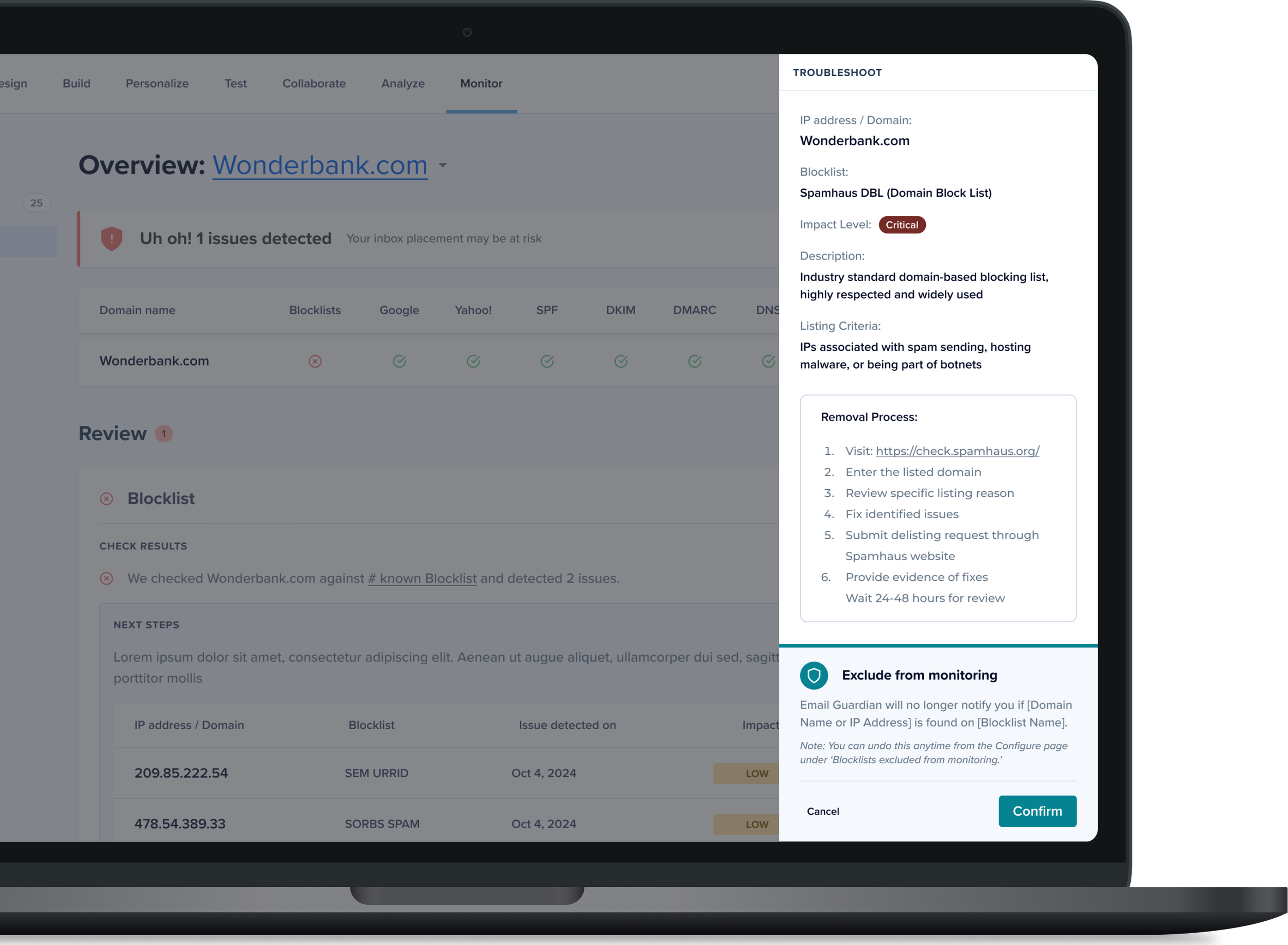
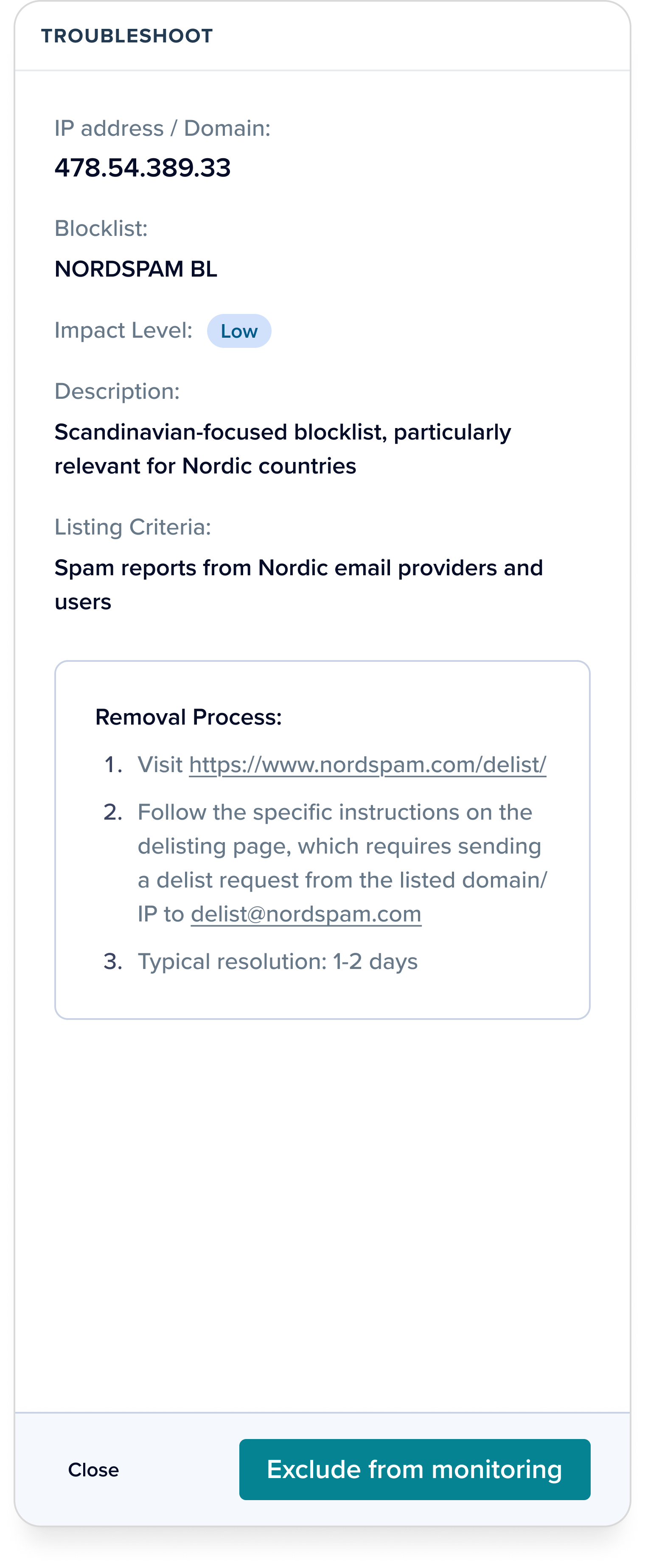
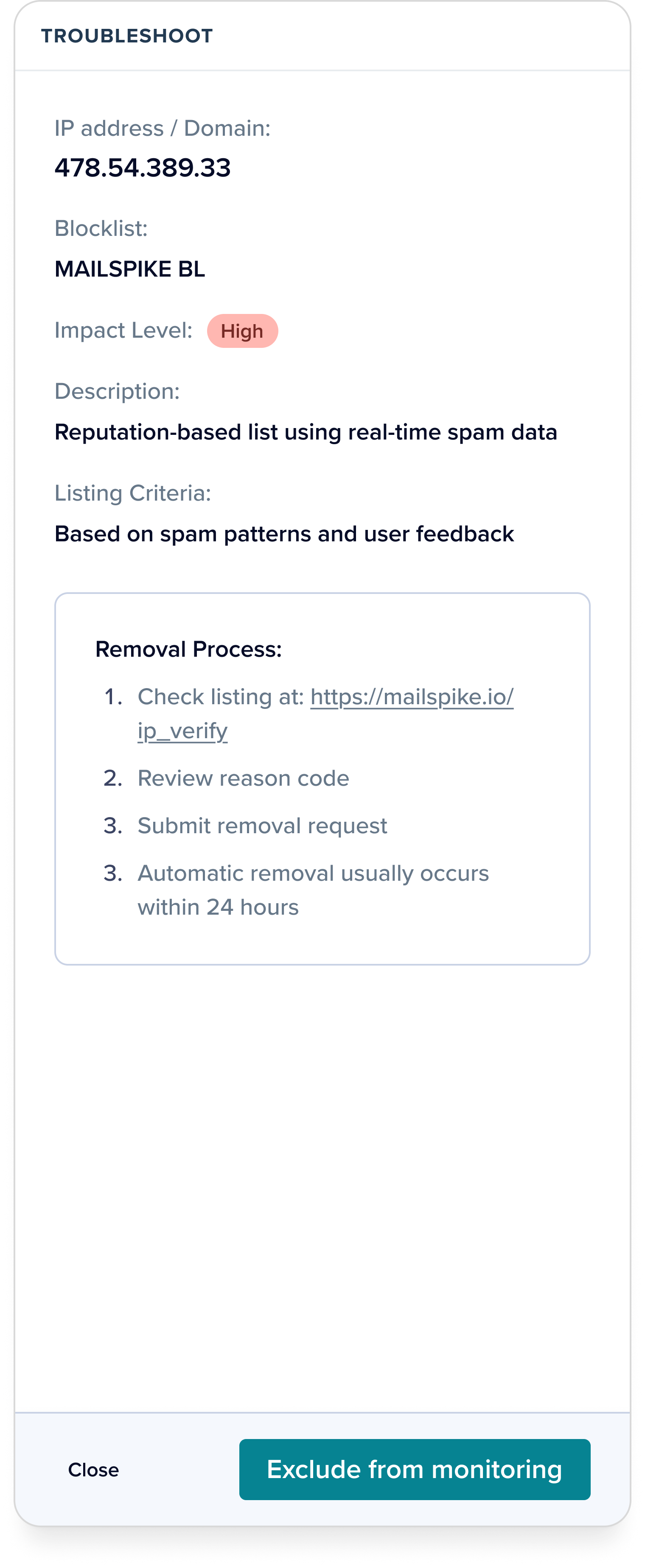
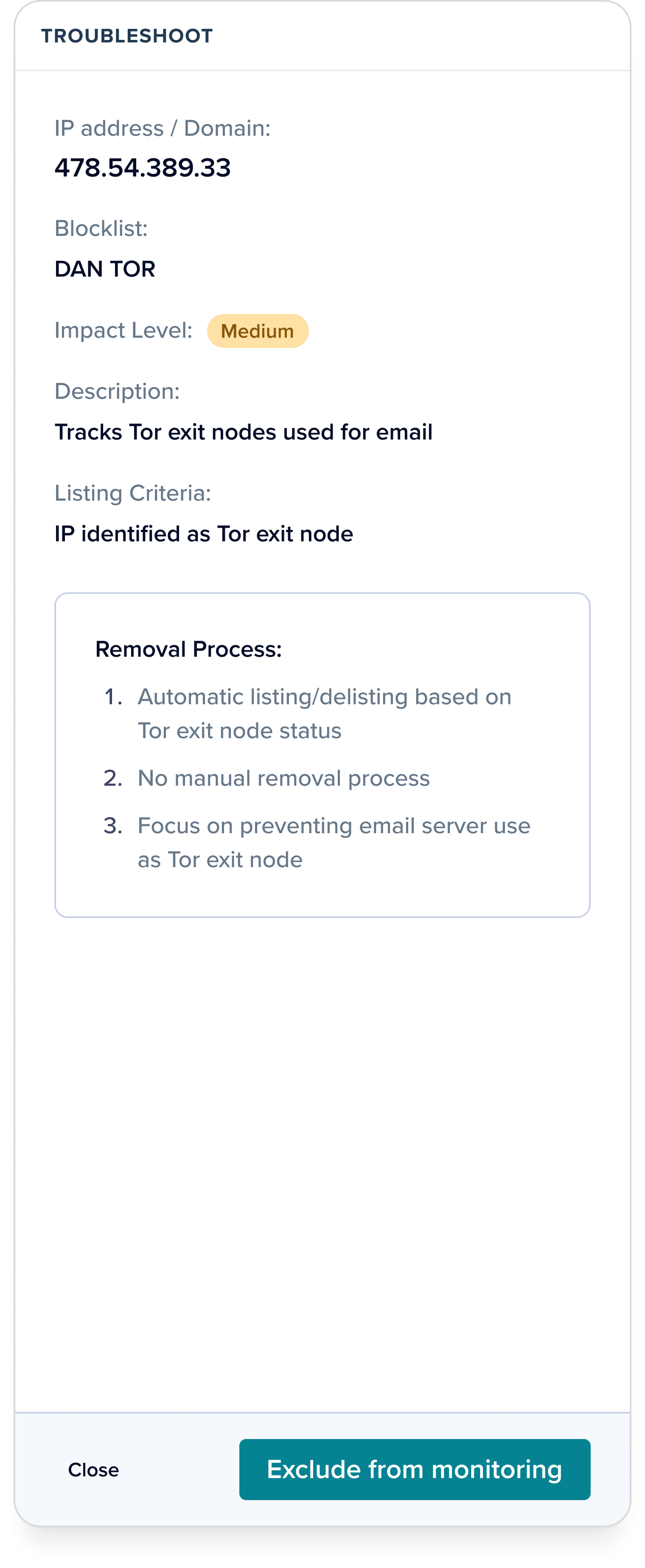
Troubleshooting Blocklist issues
Our squad designed an adaptable rating and alerting system to notify users of blocklist issues, paired with clear, step-by-step remediation paths for removal.
-
![]()
Establishing a system for overall email health
-
![Litmus' Email Guardian showing an example of the Outlook client with rendering issues]()
Prioritizing reputation by blocklists severity
-
![]()
New List Item
Description goes here -
![]()
Quick & easy set up
-
![]()
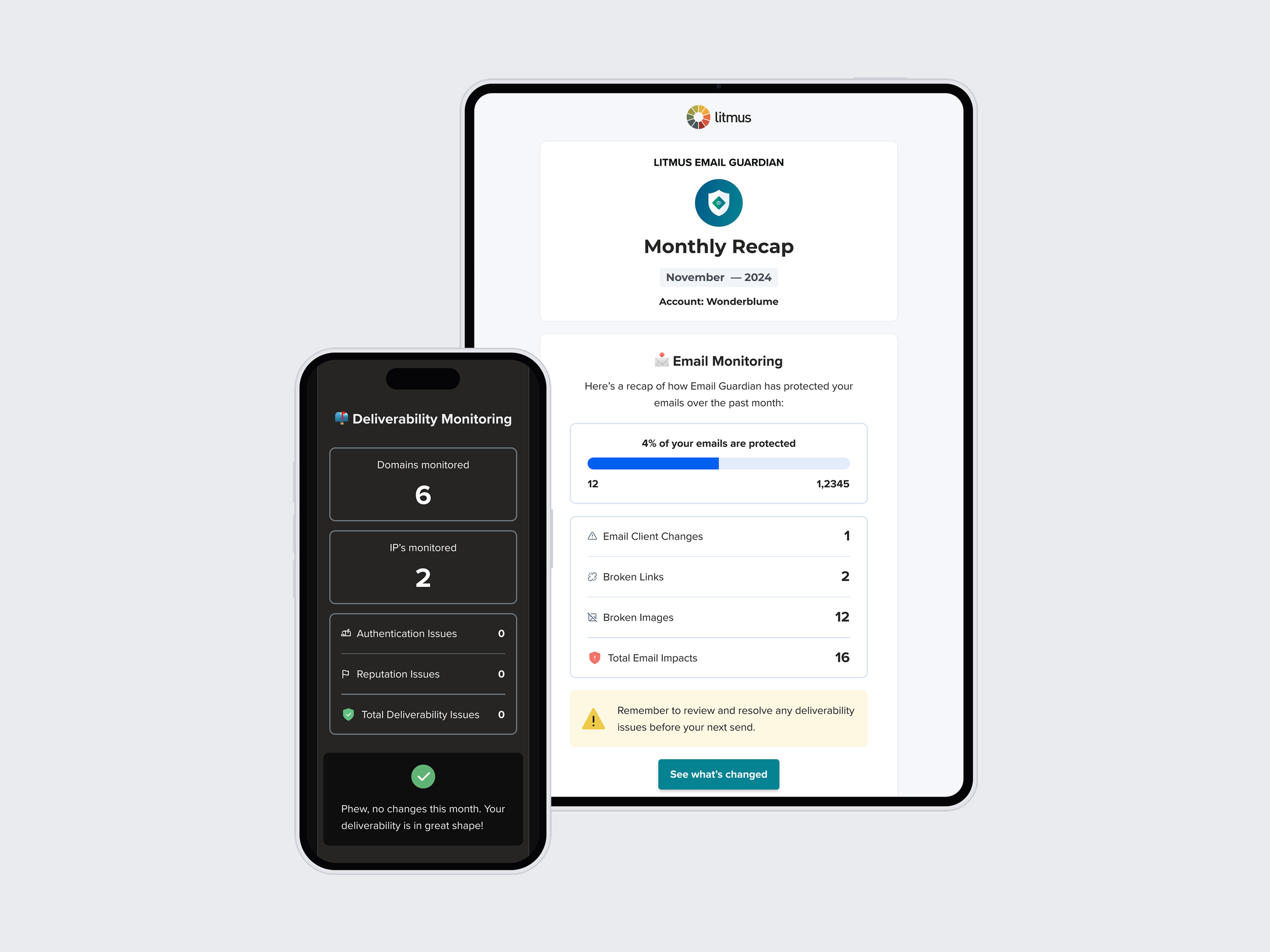
Customized email notifications
-
![]()
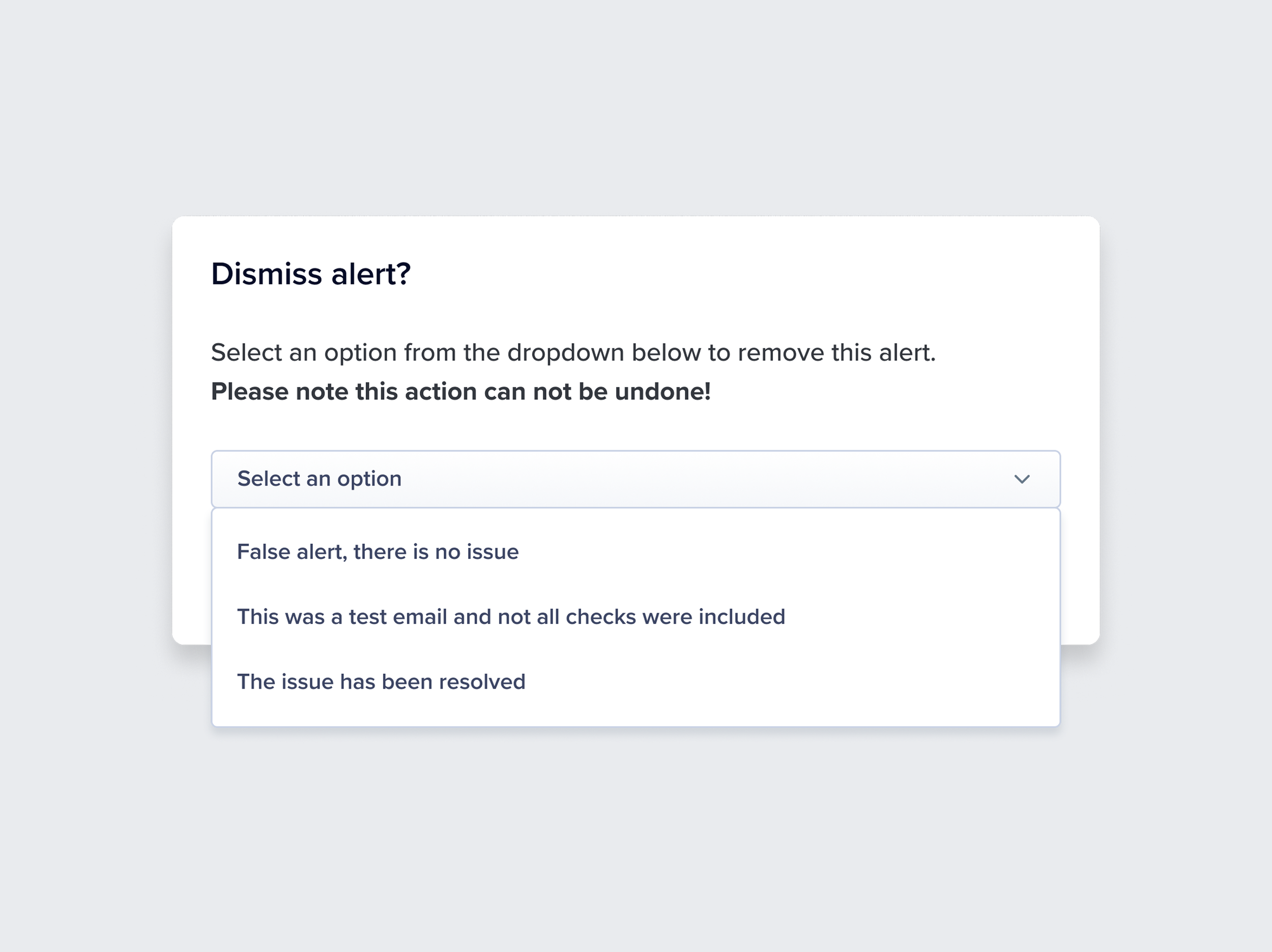
The ability to dismiss an alert and create an audit trail of issues
Success metrics & outcomes
20% +
in email deliverability
70% +
higher email accuracy
20 min
saved per email check
Email Guardian successfully transitioned Litmus from a strictly pre-send testing tool into an ongoing, post-send protective service. By expanding value across the entire email lifecycle, this capability uniquely positioned the company to capture greater enterprise market share against competitors."